Seakeeper 1 Installation Manual (90519-2) 1-233-0631 to Current
Selection of Seakeeper Installation Location
Selection of mounting location of the Seakeeper should consider the following desirable features:

The Seakeeper should be installed aft of amidships to minimize high acceleration loadings due to hull/wave impacts during operation at high speed or in large waves. If the only possible Seakeeper location is forward of amidships, then the installer should have Seakeeper review the installation location prior to finalizing the design.
- Top-down access or sufficient clearance for access and removal of the Seakeeper 1 cover is required. See Drawing No. 90516 – Seakeeper 1 Bolt-In Installation Details and Drawing No. 90514 – Seakeeper 1 Bolt-In Clearances for reference.
- Provide adequate clearance for all recommended scheduled maintenance and any repairs that may be necessary, as shown in Figure 3 and Drawing No. 90516 – Seakeeper 1 Bolt-In Installation Details.
- Access for the removal and re-installation of the Seakeeper 1 should be considered.
- The Seakeeper should be installed in a dry space to minimize effects of corrosion. Use the deck cover enclosure if installed and exposed to weather (P/N 90628).
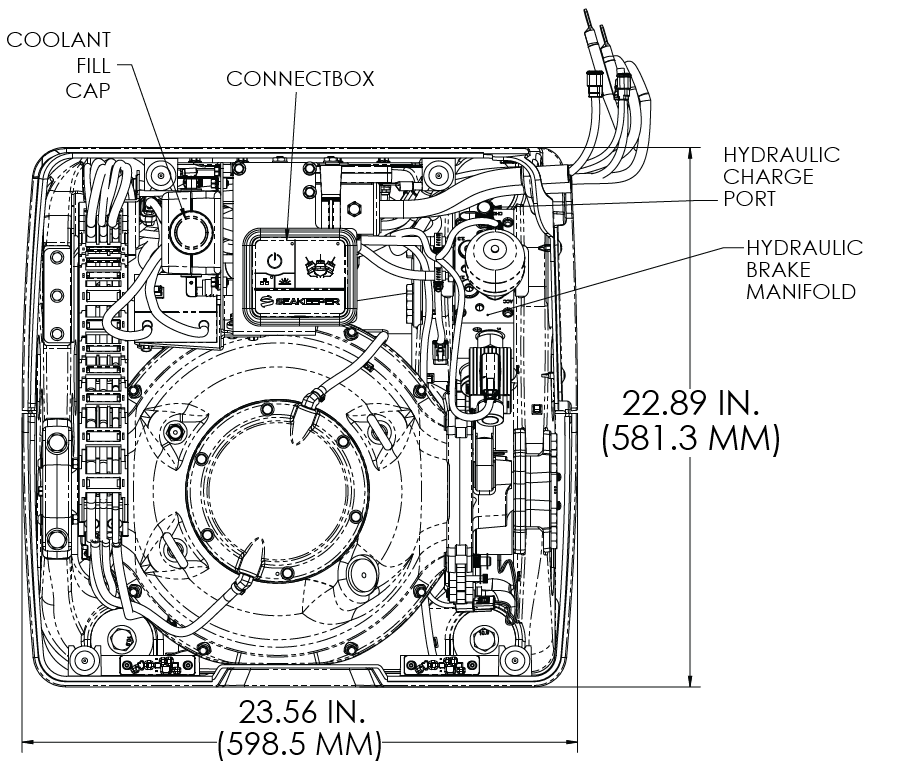
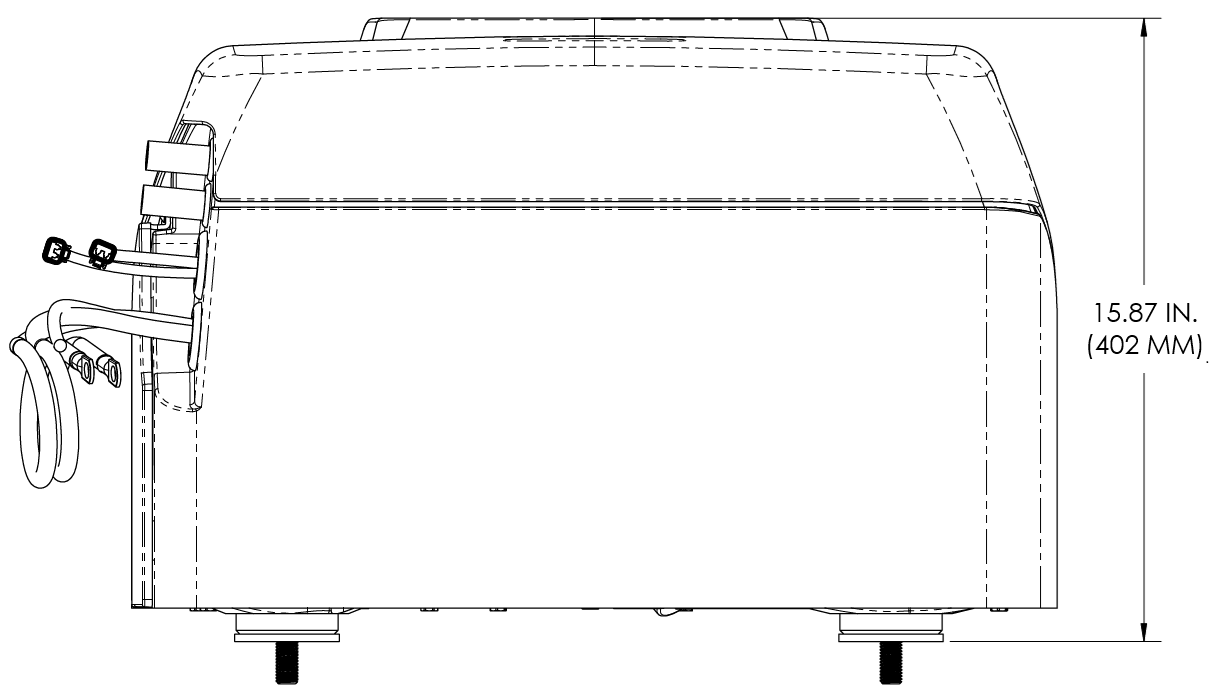
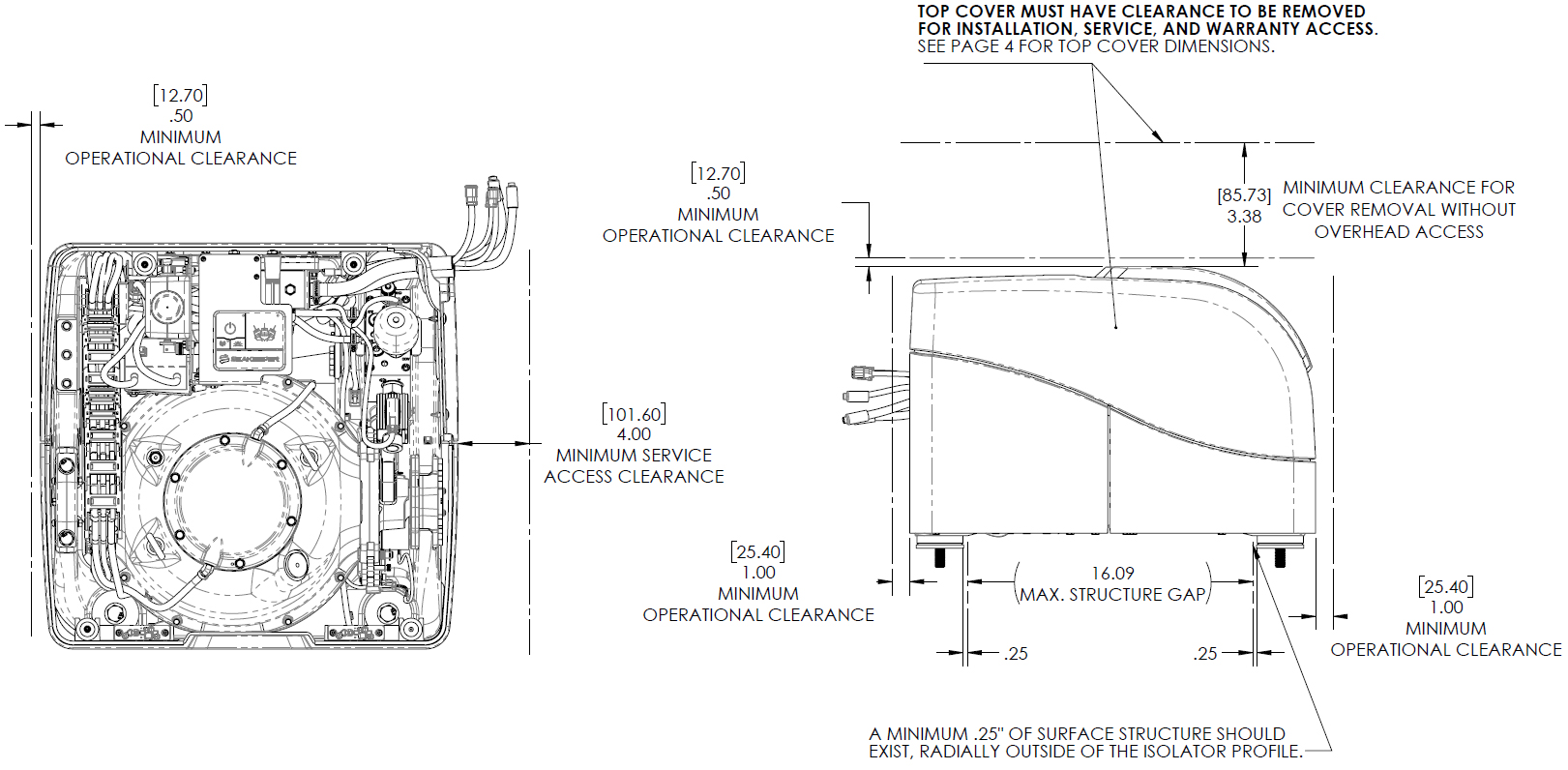
Figure 3 – Seakeeper 1 Service and Operating Clearances (Drawing No. 90516)
Note: Adequate access to remove the Seakeeper 1 cover must be incorporated into the installation design to allow for regular maintenance, service, and repair of components.
Noise and Soundproofing
Seakeeper noise has been measured under steady-state conditions (no wave load) in Seakeeper ‘s Engineering Lab and in our Factory Demo Boat. The steady-state noise at 1meter is typically less than 64 dBC. As the frequencies emitting the highest sound pressuresare low (like other marine machinery), it is recommended that the Seakeeper be installed inan enclosed space such as a leaning post/seat, bilge, center console, or machinery space.