Seakeeper 40 Operation Manual (90716-3); 40-243-0078 to Current
3.2 Operating Instructions
Start Up Instructions
- Make sure AC and DC power are available.
- Turn on the boat’s DC circuit breaker that supplies power to the Seakeeper.
- Turn on the boat’s AC circuit breaker that supplies power to the Seakeeper.
- The seawater pump will operate when cooling is required. In typical installations of the Seakeeper 40, the Seawater Pump is powered by a DC breaker that must be ON to operate the Seakeeper.
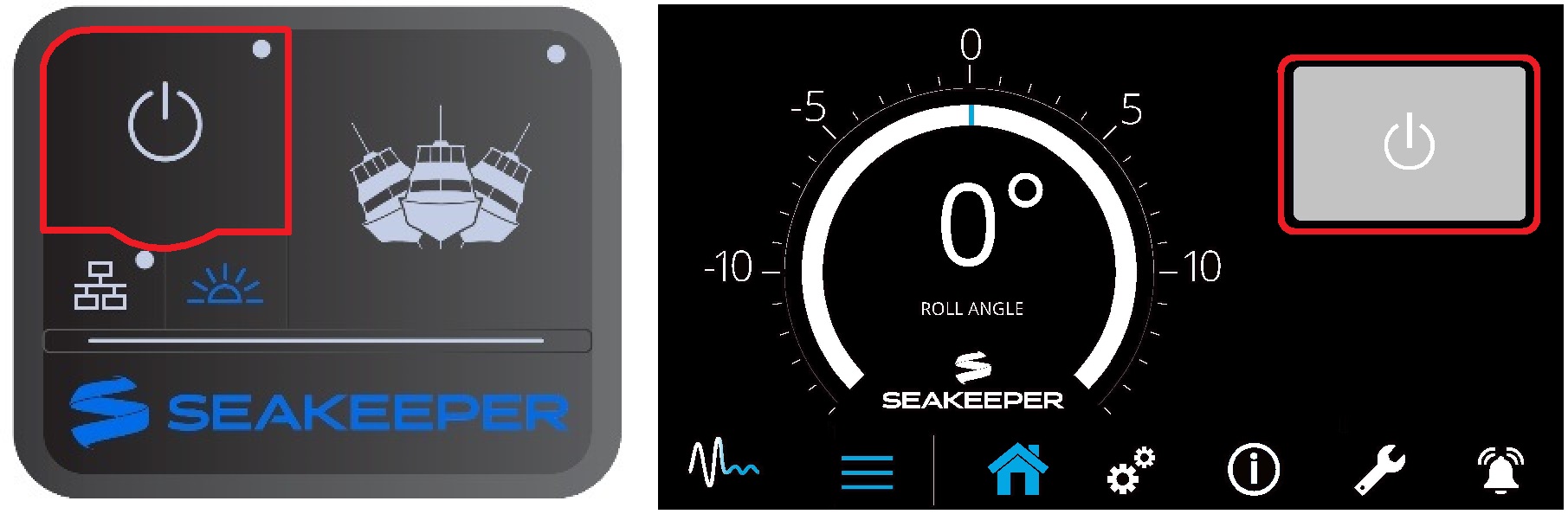
- When the DC power is turned on, the Display will initialize and the Home Screen will appear. If a fault is present an Alarm Screen will appear.
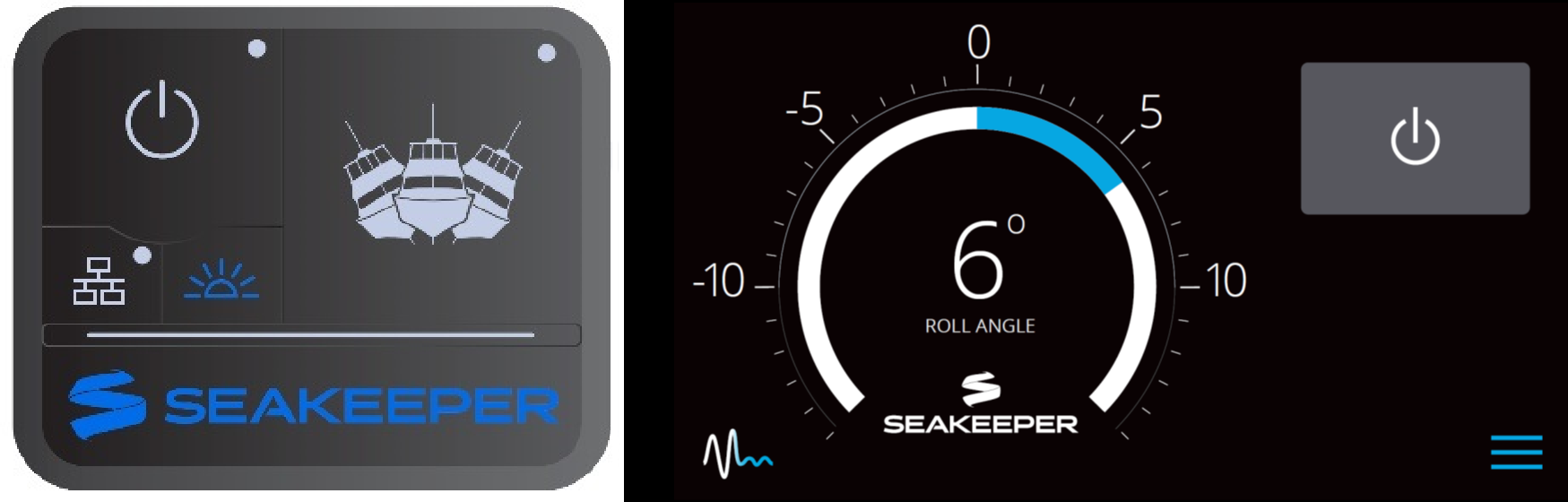
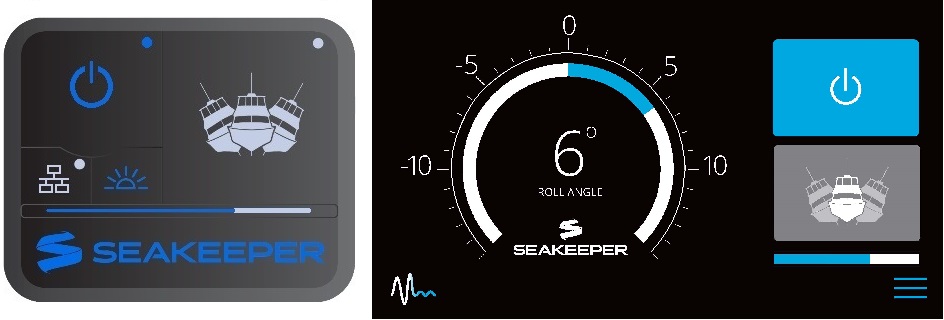
- To turn the Seakeeper on, press the On/Off button, the button will turn blue. The progress bar will appear and indicate how soon the Seakeeper will be available for stabilization. When the Seakeeper is initialized and up to minimum operating speed the Stabilize button will appear. At this point, the Seakeeper is available for stabilization.
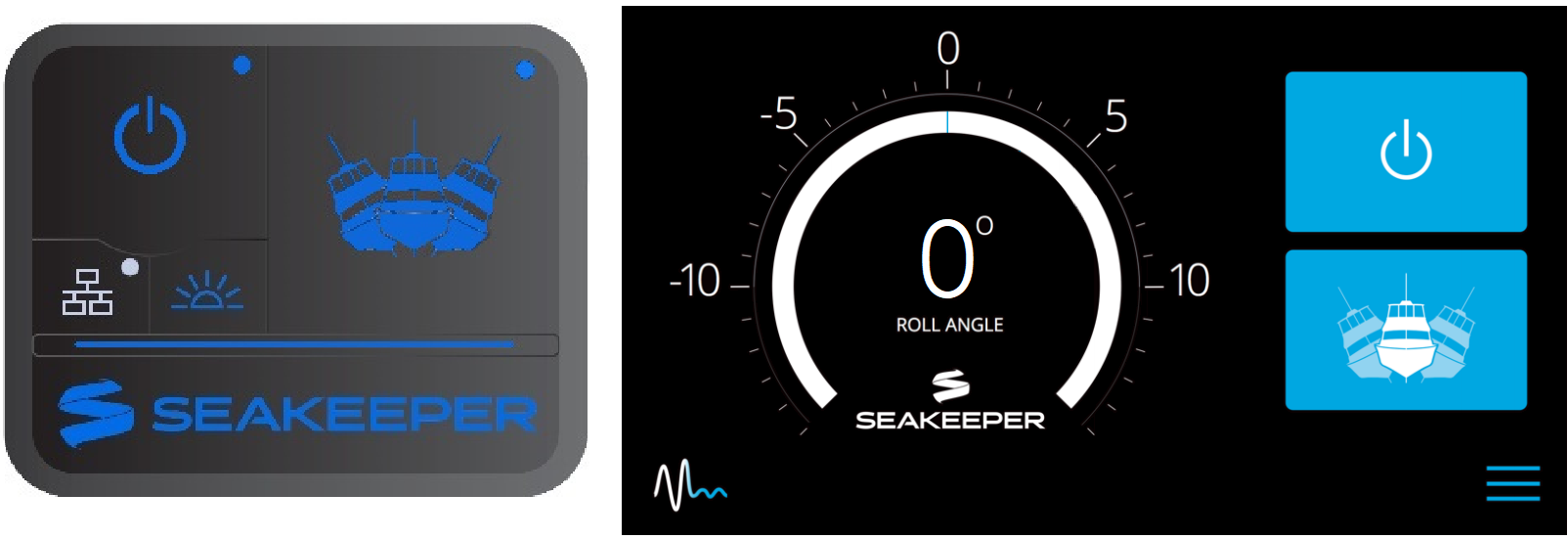
- The progress bar indicating flywheel spool-up will disappear from the display screen once the STABILIZE button is pressed (turns blue) and the ConnectBox will fully illuminate. At this point, the Seakeeper has reached its rated operating RPM and maximum stabilization is available. If the STABILZE button has not been pressed (button is grey), pressing the button will turn it blue and stabilization will be provided. The seawater pump will cycle on and off based on the operating temperature of the Seakeeper 40.
Stabilization

If it is necessary to shut off power to the flywheel motor and slow the flywheel for any reason, press Seakeeper On/Off button; the button will turn grey and the Stabilize button will disappear, indicating the command has been accepted. It takes approximately 4+ hours for the speed to slow down to 0 RPM.
___________________________________________________________
If it is necessary to stop Seakeeper motion for any reason, press the Stabilize button. The Stabilize button will turn grey indicating that the Seakeeper is locked. Never attempt to work on the Seakeeper until the flywheel has stopped spinning. In the event that the brake system has automatically locked the Seakeeper due to an alarm or failure, no attempt should be made to bypass the alarm or automatic lock.
Improper boat operation including, without limitation, aggressive maneuvers at high speed can result in the boat becoming unstable. If you intend to operate the boat in such a manner, you should lock the Seakeeper
in the vertical position before operating the boat in that manner. This is easily accomplished by turning the boat to starboard at slow speed in the Stabilize mode. After turning to starboard for 5 seconds, turn the Stabilize mode off while continuing to turn and then go to the Service Page on the display and confirm the Gyro Angle is within +/-10 degrees of 0 degrees.
To stabilize the vessel after the Seakeeper is On and the flywheel is above the minimum stabilization RPM:
- Press the Stabilize button. The button will turn blue indicating that the Seakeeper is stabilizing the roll motion. The stabilization mode starts gradually; it takes 5-10 seconds to reach full effectiveness.
Speed Adjustment
- Press the Menu button
 then select the Settings Screen
  .
. - Select the desired RPM button to adjust the Seakeeper‘s speed. The selected RPM button will turn blue. Speed selection buttons shown below are examples and may not match operating speed of installed Seakeeper.
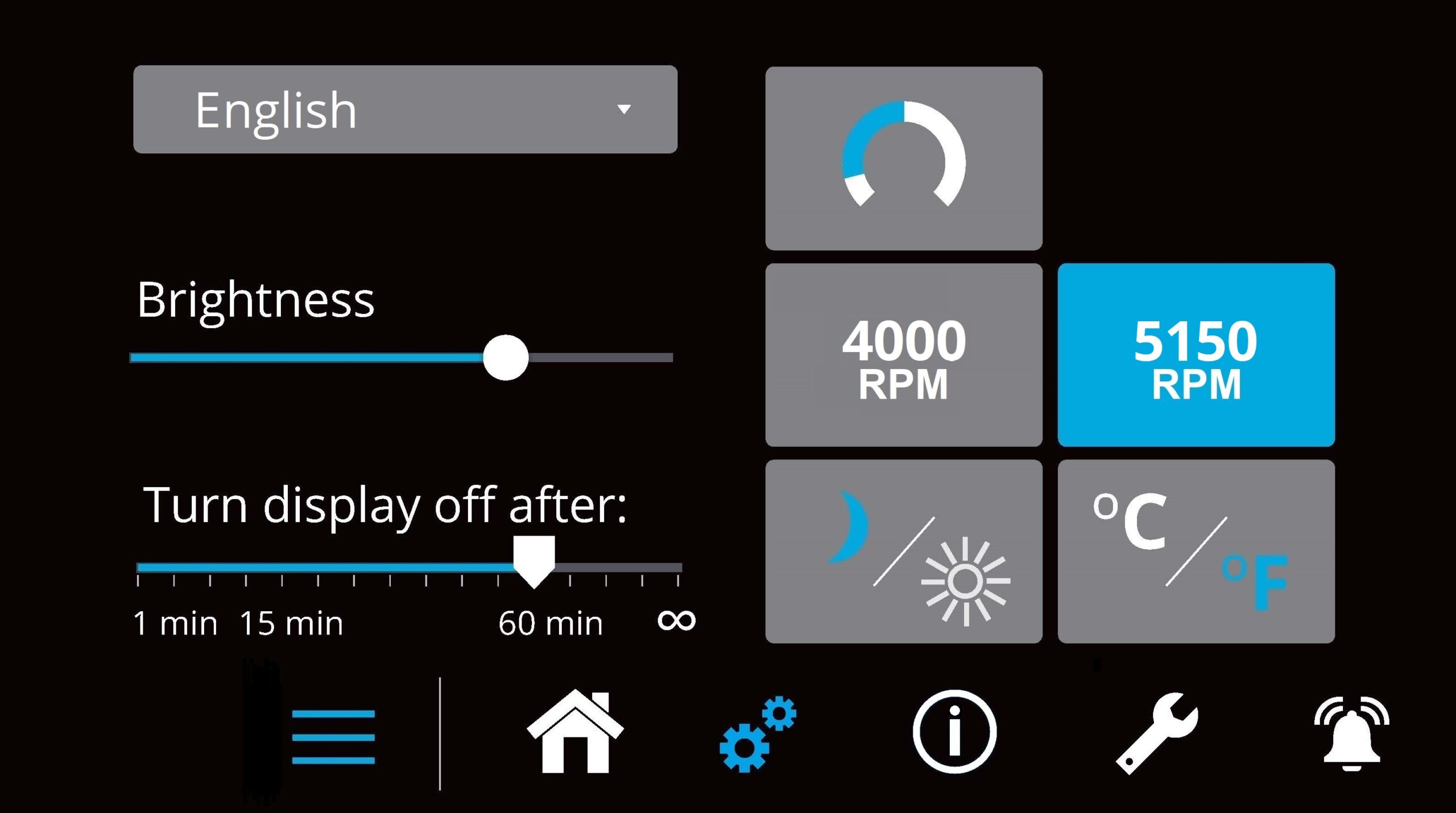
Seakeeper 40 normal operational speed is 5150 RPM. Quiet mode operates at 4000 RPM, which allows stabilization at a reduced flywheel speed. After a 24 V power cycle to the Seakeeper, the speed selection will revert to 5150 RPM.
Normal Shut Down
The Seakeeper should be stopped when stabilization is no longer required. Once the vessel is secured in the slip, the high and low current DC power to the Seakeeper should be switched to the Off position. The Seakeeper will continue to spool down to 0 RPM. No cooling is required during this time. Note Seakeeper will take 4+ hours to coast down to 0 RPM from full speed.
Note: The seawater pump may run for up to 5 minutes after the Seakeeper is switched off and is coasting (with low current DC power applied).
The Seakeeper should be stopped when secured in the slip and stabilization is no longer required. This maximizes life by allowing the Seakeeper to start the coast down cycle. Once the vessel is secured, the AC and DC breakers can be switched Off. The Seakeeper will continue to spool down to 0 RPM. No cooling is required during this time.
Note: The seawater pump may run for 5 minutes after the Seakeeper is switched off and is coasting.
- Press the Seakeeper On/Off button. The On/Off button will turn grey. The Seakeeper will discontinue stabilization and the flywheel will start coasting.
- Once the vessel is secured in the slip and the crew has shut down the generator and engines, switch the AC and DC breakers that control the Seakeeper Off. The flywheel will continue to spool down to 0 RPM. This can take 4+ hours from full speed. When the flywheel has stopped spinning, 0 RPM will appear on the screen.
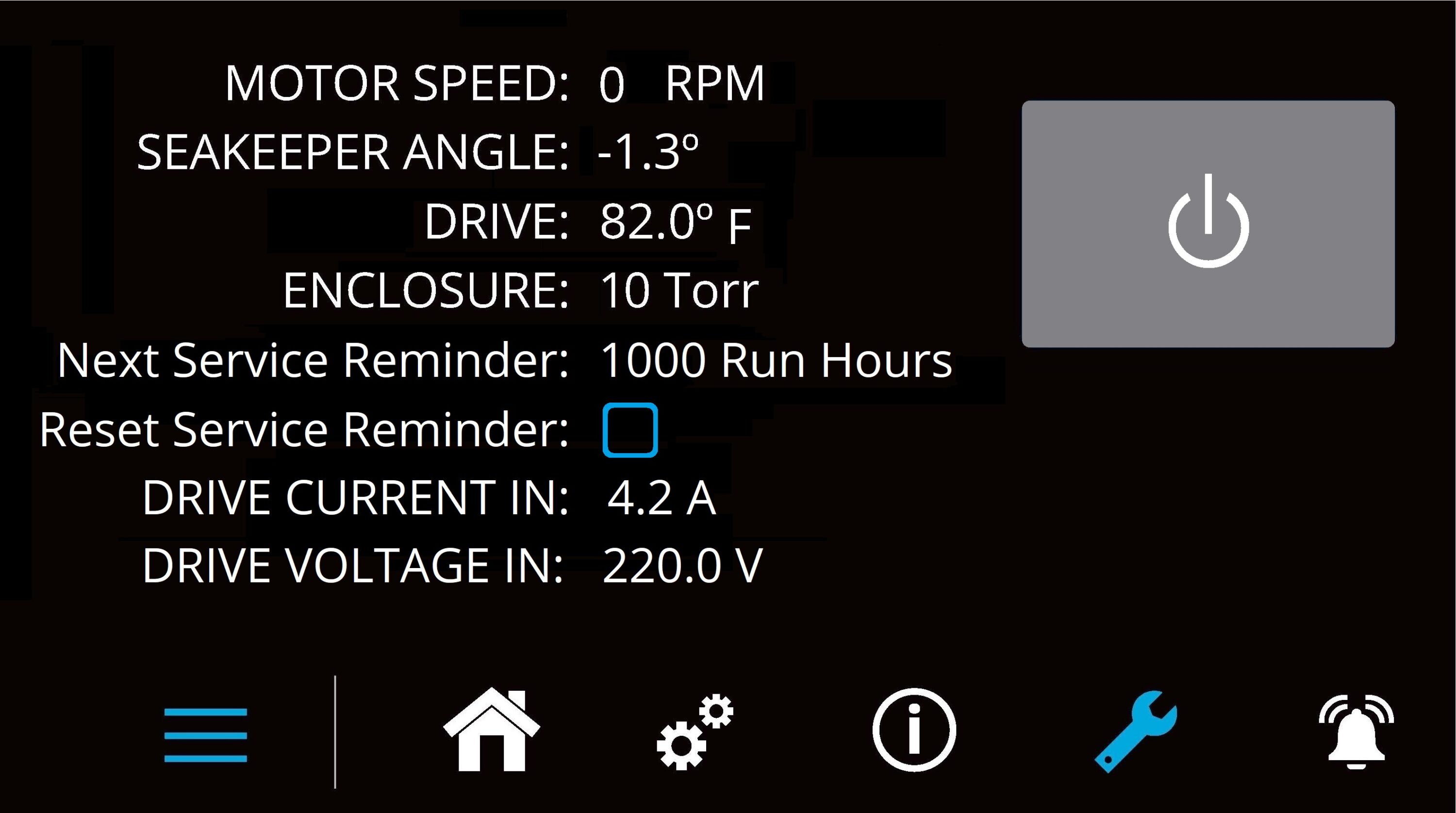

The circuit breakers should be left on as long as possible while the Seakeeper is spinning to remove heat from the Seakeeper. During normal operation, the Seakeeper should be stopped when securing at the slip and stabilization is no longer required. This maximizes long term life as it allows the Seakeeper to start the coast down cycle. Once the vessel is secured in the slip and the crew has shut down the generator and engines, the AC and DC breakers that control the Seakeeper should be switched to the Off position. The Seakeeper will continue to spool down to 0 RPM. No cooling is required during this time. Note Seakeeper will take approximately 4+ hours to coast down to 0 RPM from full speed. The Display will indicate 0 RPM when the flywheel has stopped.
Note: The seawater pump may run for up to 5 minutes after the Seakeeper is switched off and is coasting.